高启动成本
用户往往默认运动需要一整块时间,即使拥有10-20分钟空闲,也不会自然将其理解为可运动的时间。

Spark+
把碎片时间转化为日常运动机会
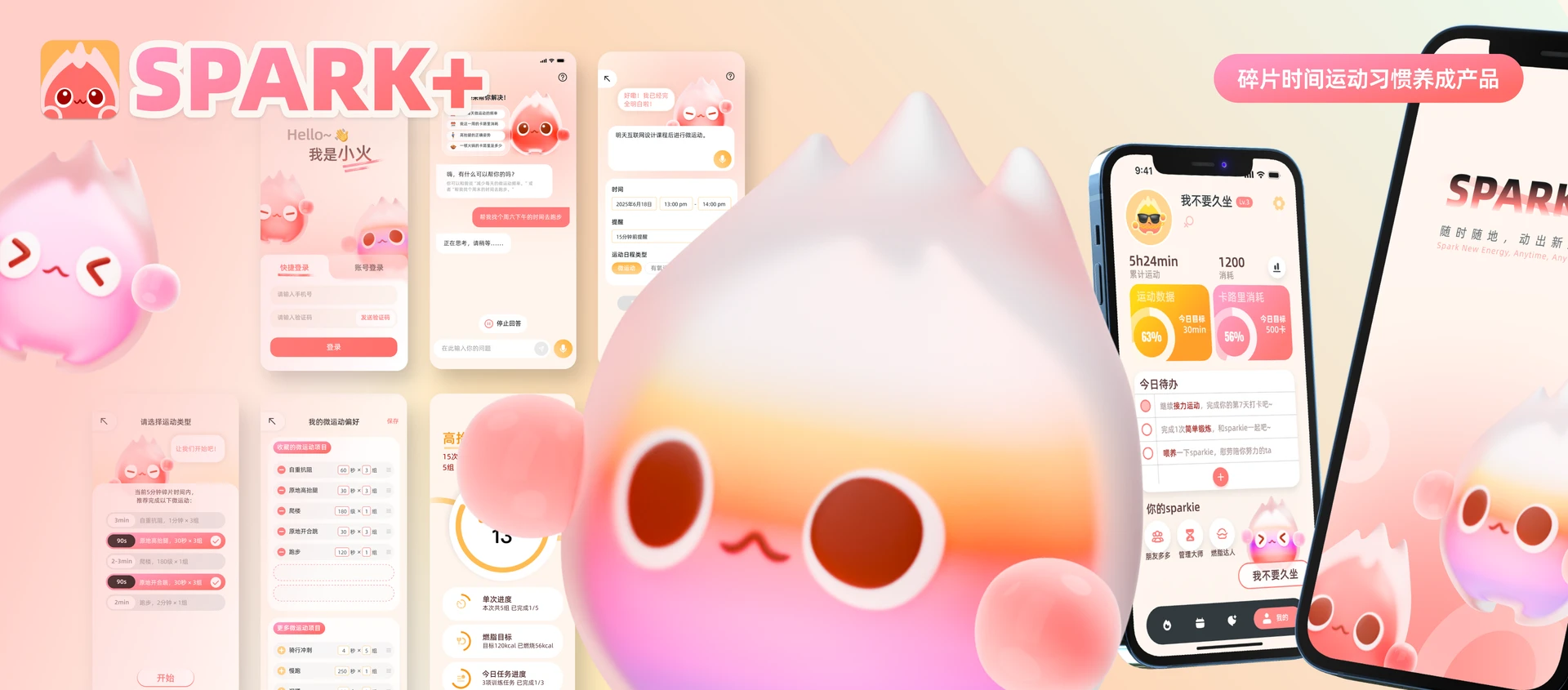
Spark+ 是一款面向大学生的碎片化运动习惯养成产品,帮助解决运动启动难、坚持难、缺乏陪伴的痛点。
通过日历管理、运动规划、虚拟伙伴与校园社交接力机制,Spark+尝试同时降低运动的启动门槛与坚持成本,让运动成为能够自然融入日常生活的行为。
本项目完成从用户研究、产品定义、原型设计到内容运营的完整验证,社交平台运营两周获得 2900+ 浏览、370+ 点赞、110+ 粉丝。
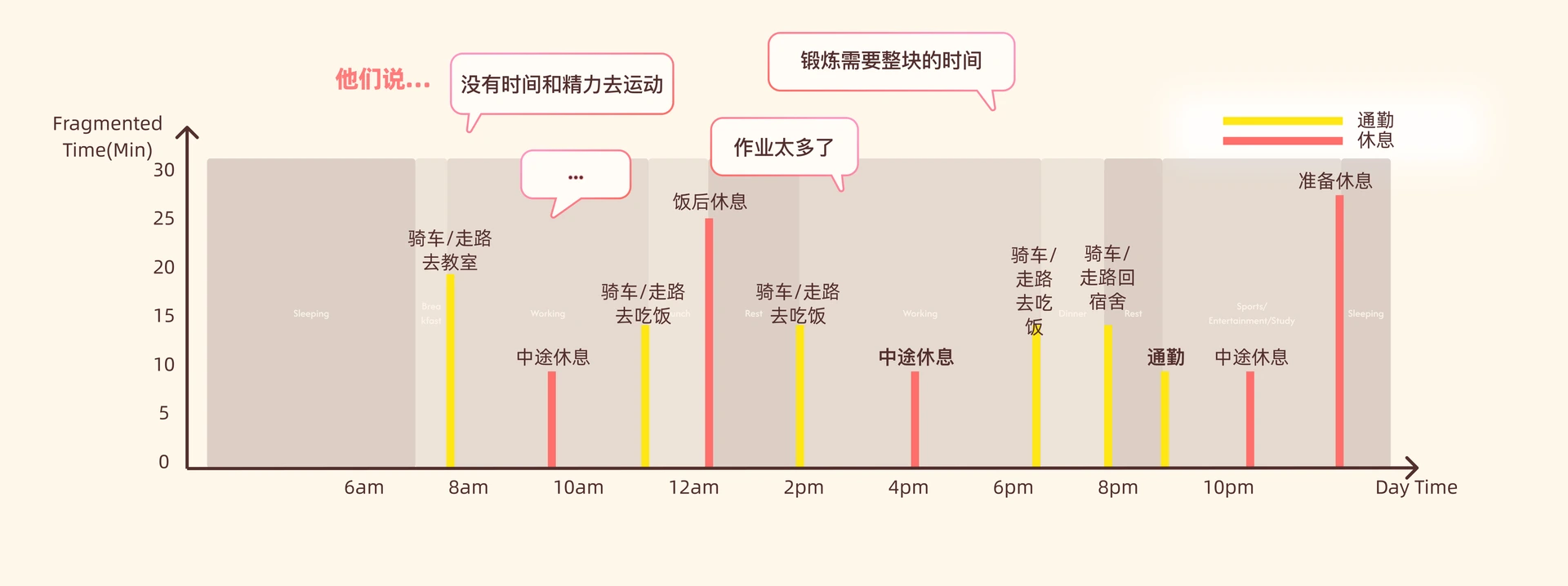
调研初期,我们发现一个明显矛盾:
• 大学生普遍具有运动和健康意识,很多人却仍然难以建立稳定的锻炼习惯。
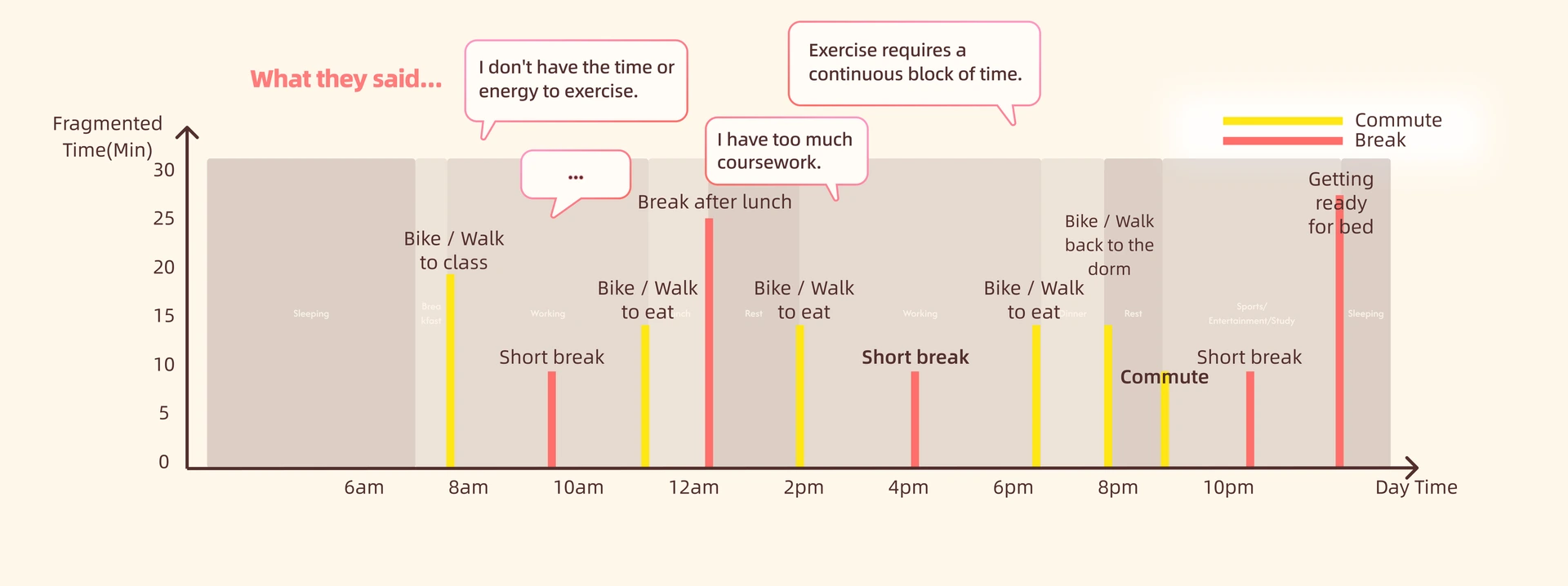
• 进一步研究发现,他们每天拥有大量的碎片化时间(约3.5h/天),分散在通勤前后、学习间隙等,并经常被手机使用等低投入活动占据,进一步导致时间被碎片化(约1.7h/天)。
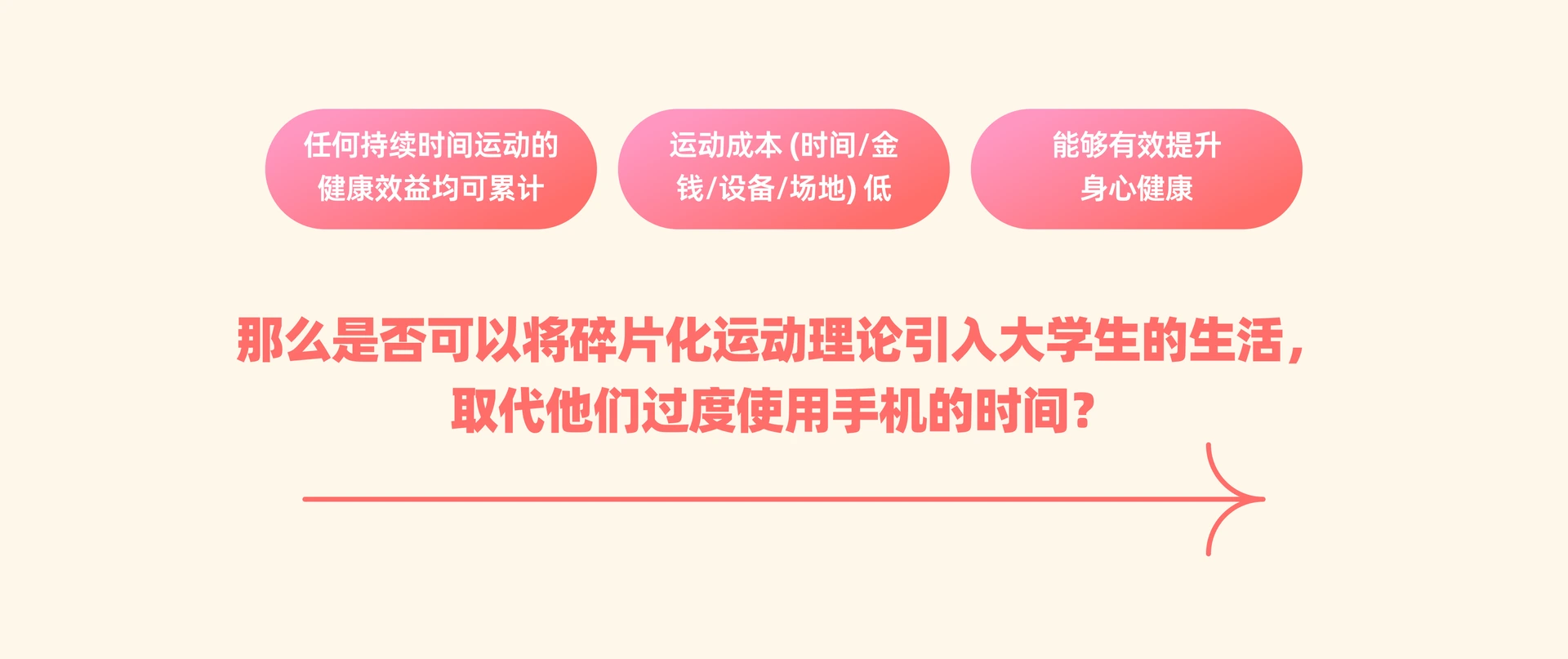
这让我们开始重新思考,阻碍运动的,究竟是“没有时间”,还是“没有一段看起来足够运动的完整时间”?
文献研究让我们注意到了 Exercise Snacks(碎片化运动理论),将运动拆解为多次短时、具有一定强度的活动,每次只持续数分钟,同样能够累积健康效益。
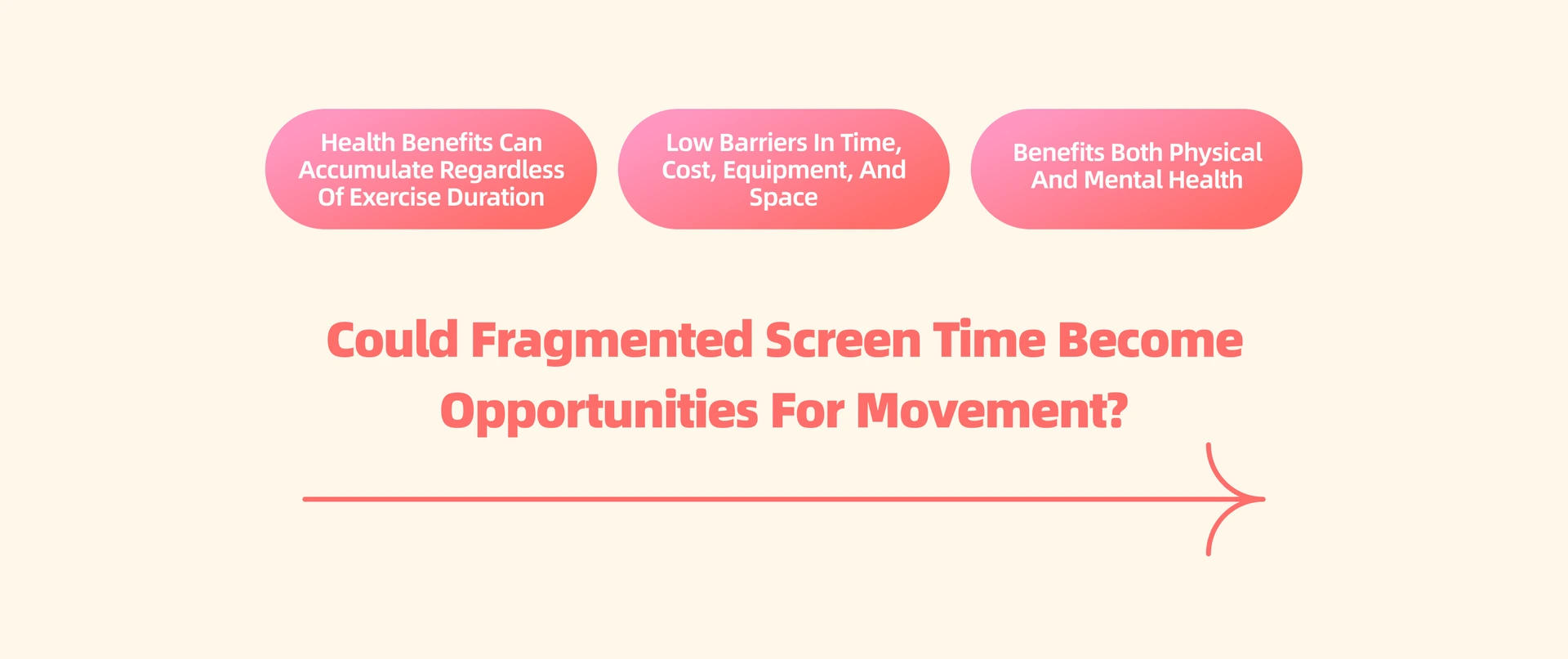
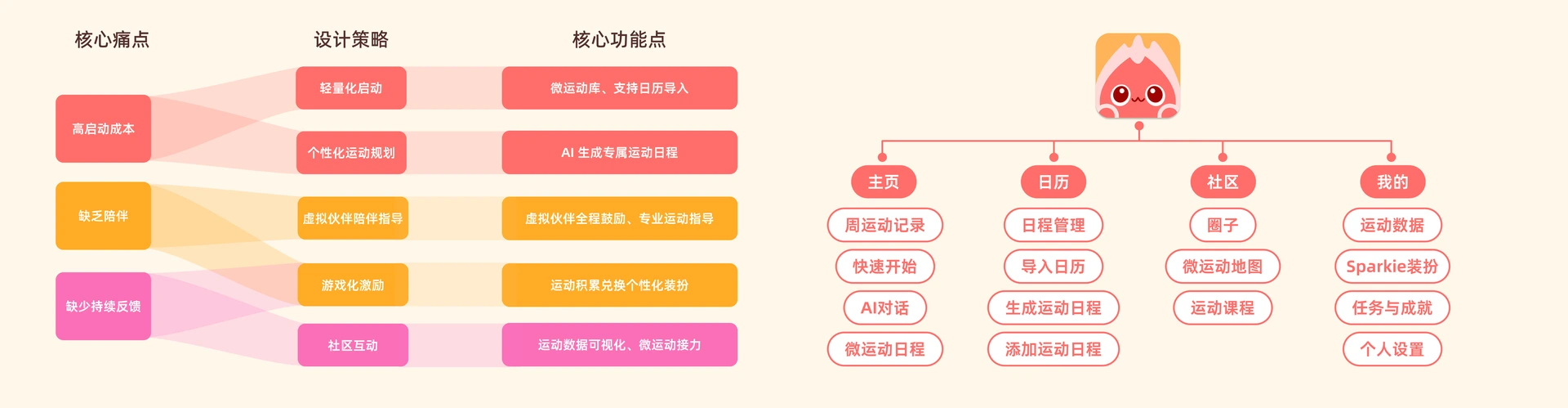
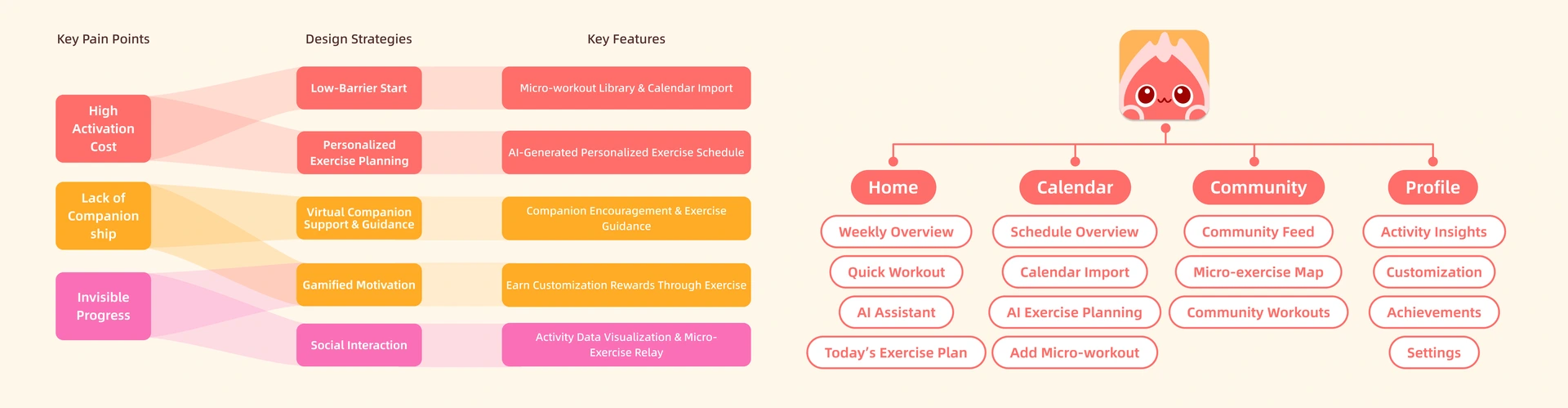
通过归纳访谈(N=6)与问卷(N=38),我们归纳出三个彼此关联的用户痛点:
用户往往默认运动需要一整块时间,即使拥有10-20分钟空闲,也不会自然将其理解为可运动的时间。
独自运动缺乏互动与情绪反馈,难以从一次微小行为中获得足够的即时满足。
短时运动产生的变化不容易被立即感知,用户常常缺乏继续坚持的理由。
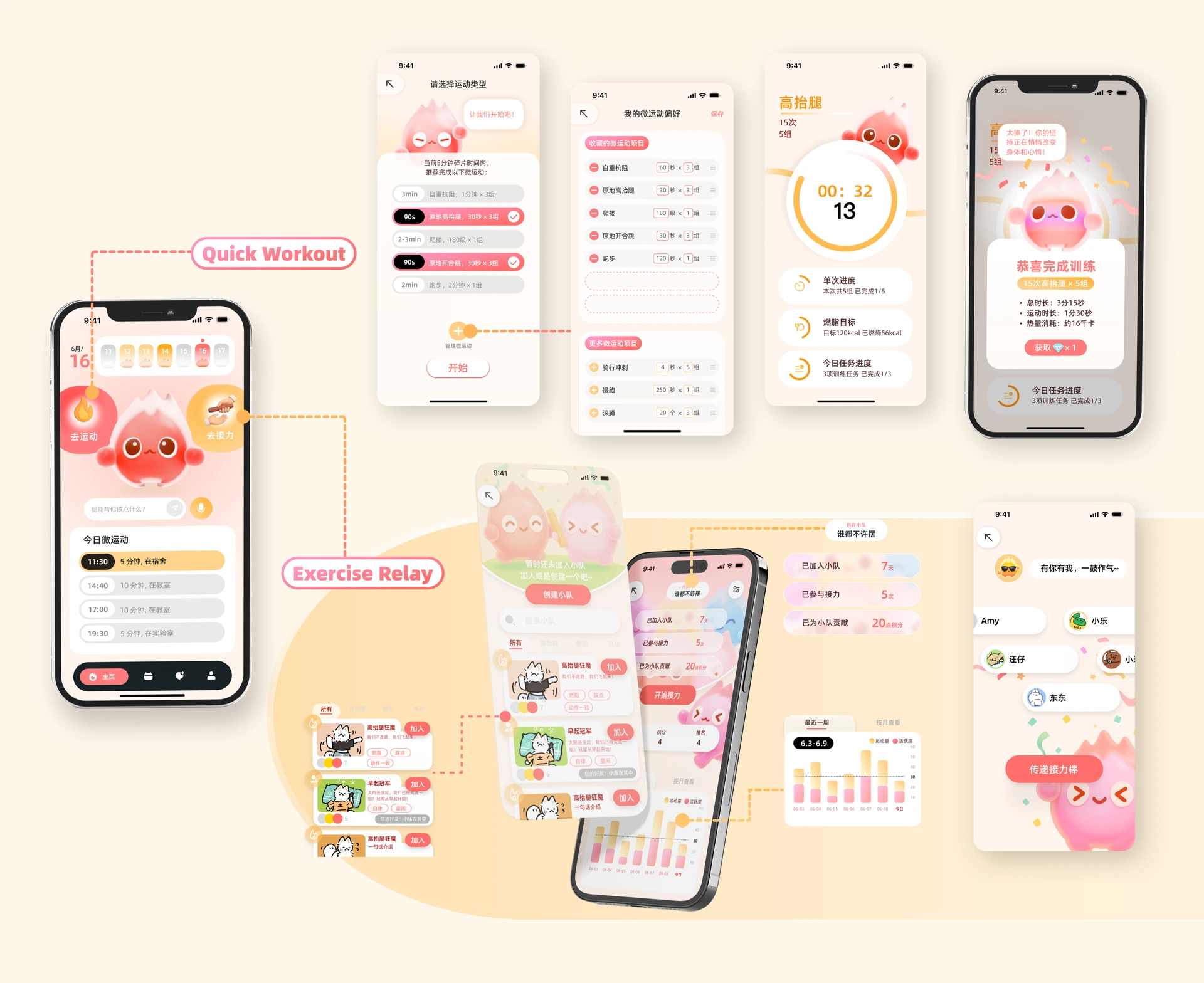
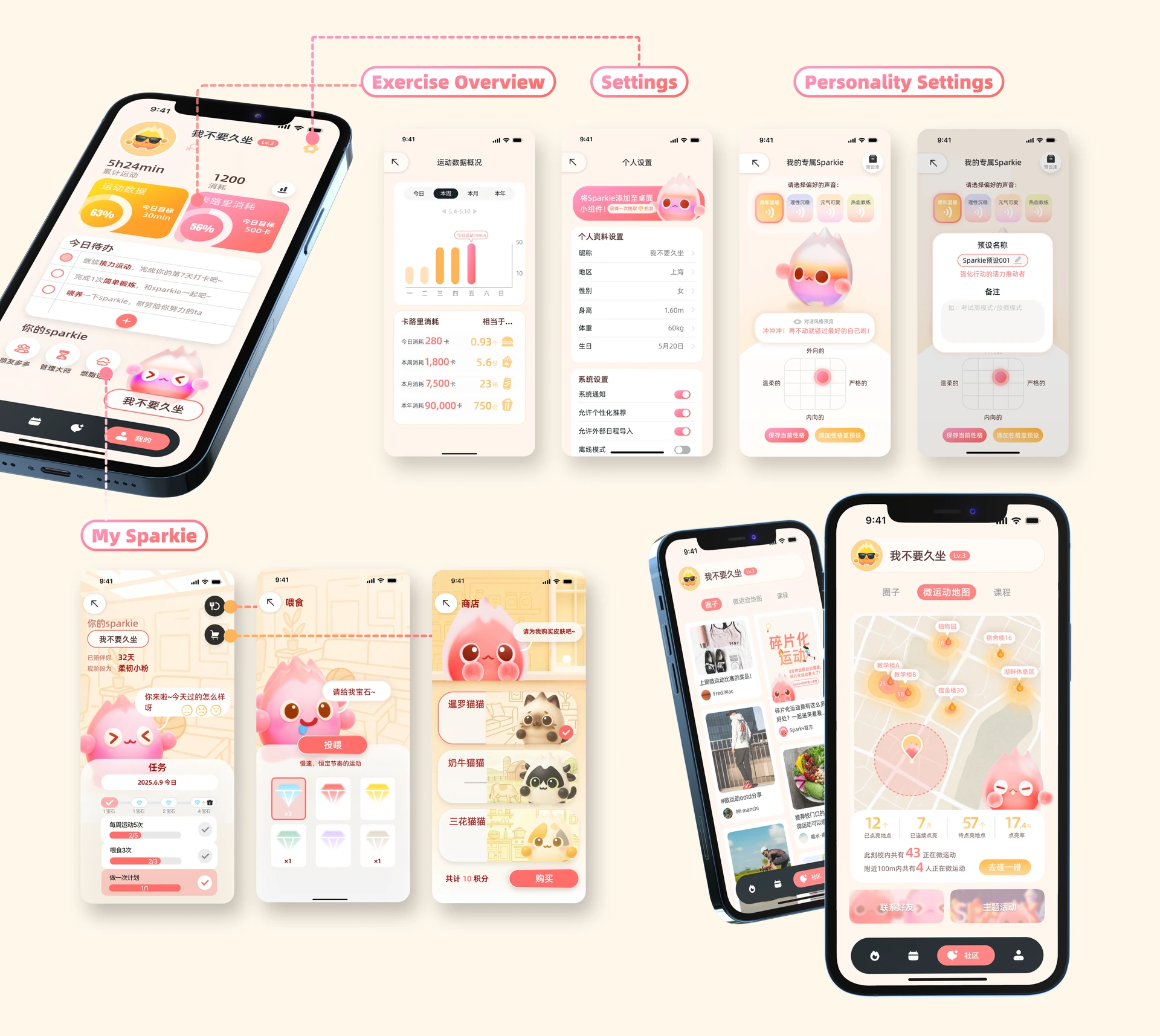
对于可预期的碎片时间,用户可以根据日历中生成的微运动日程按计划完成运动。当临时出现空闲时间时,也可以直接通过首页快捷运动入口,根据当前可用时长选择微运动并立即开始。
在接力模式下,用户完成一次运动后,可以将接力棒传递给朋友或附近用户,将个人运动延伸为轻量的社交互动。社区地图进一步将校园中的微运动行为可视化,增强群体参与感,推动微运动从个人习惯逐渐发展为随时随地发生的校园健康新风尚。
For predictable gaps in their schedules, users can follow the micro-workout plans generated from their calendars. When unexpected free time becomes available, they can also use the “Quick Workout” or “Exercise Relay” entry on the home screen to select a micro-workout based on the time available and start immediately.
In Relay Mode, users can pass the baton to friends or nearby users after completing a workout, extending individual exercise into a lightweight social interaction. The community map further visualizes micro-exercise activities across campus, strengthening a sense of collective participation and helping micro-exercise grow from a personal habit into a healthy campus trend that can happen anytime, anywhere.
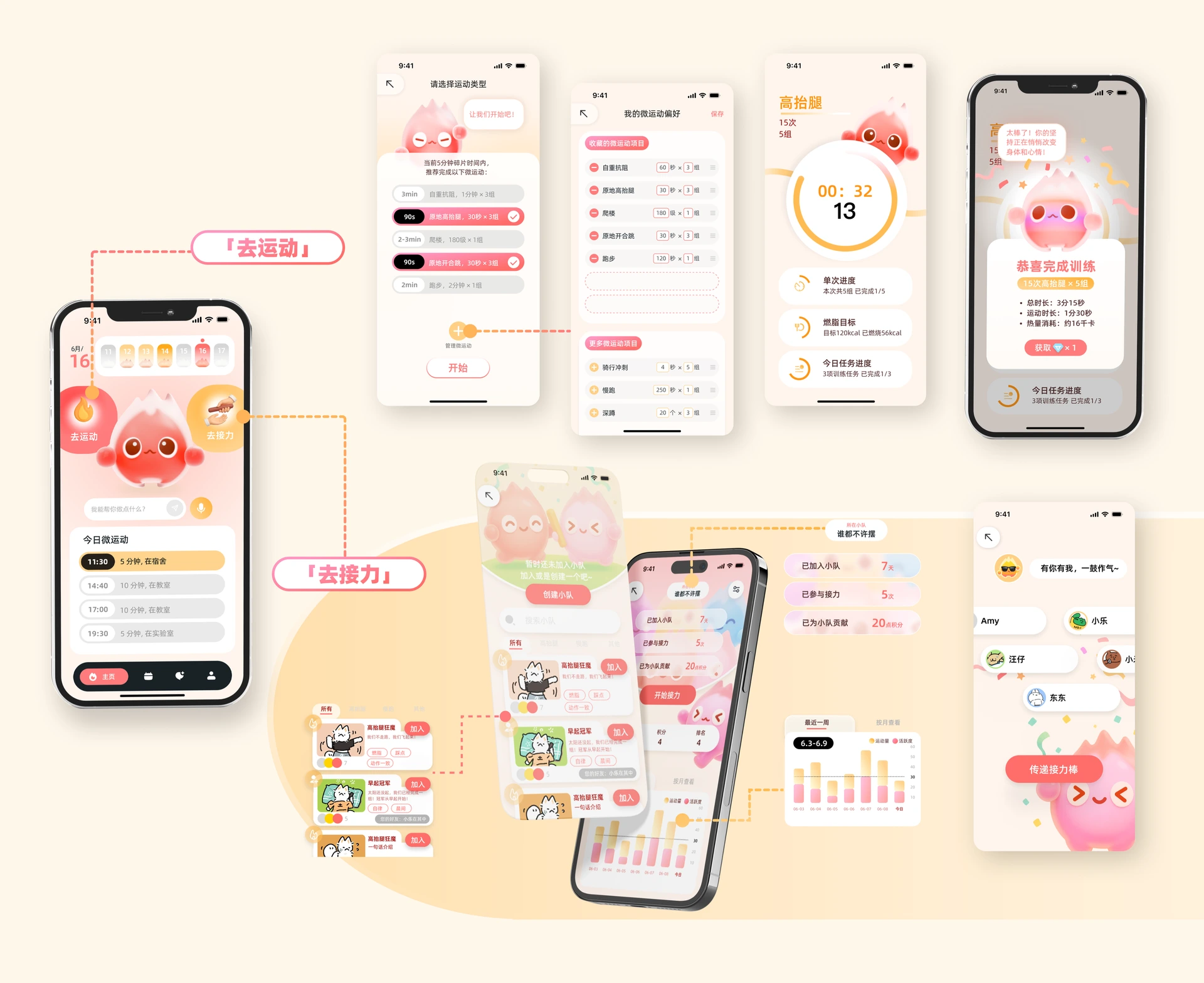
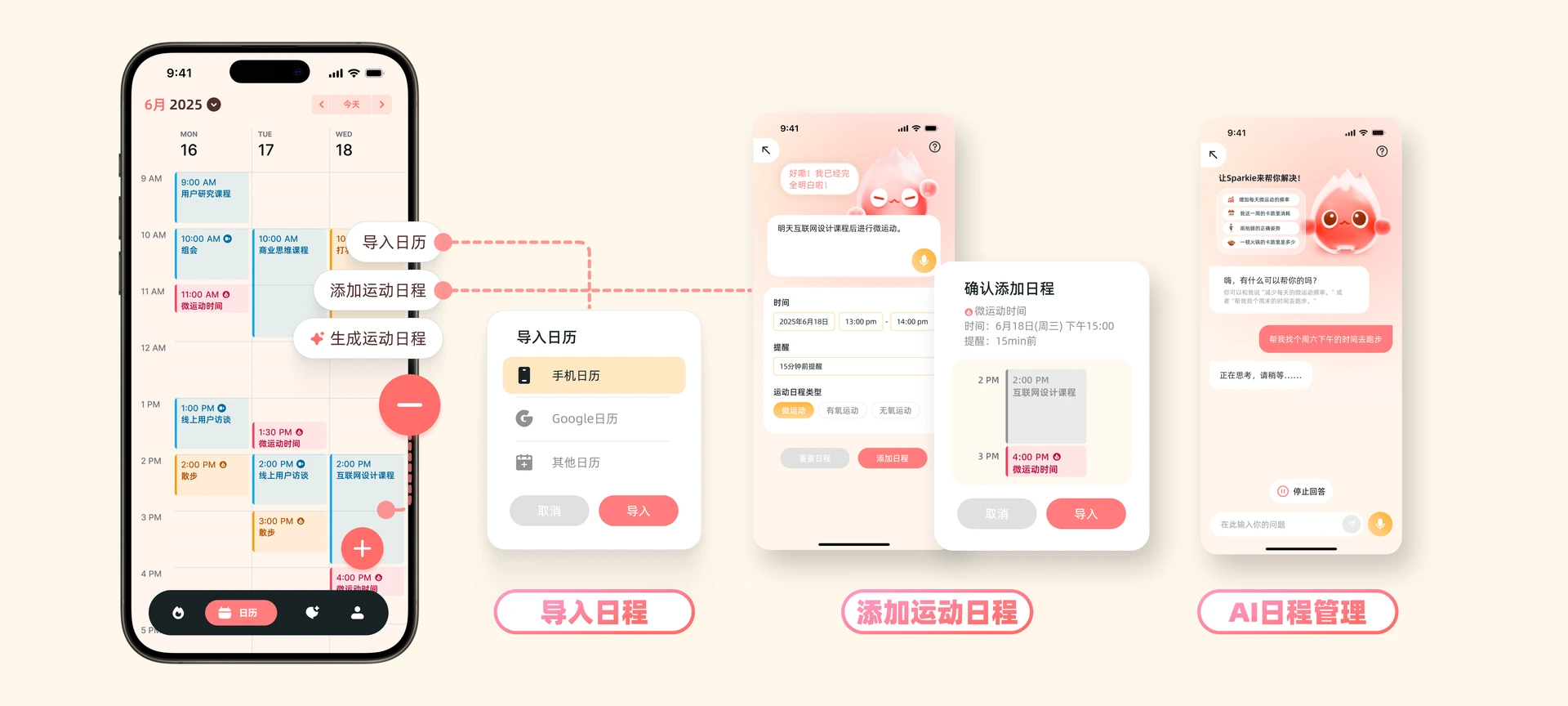
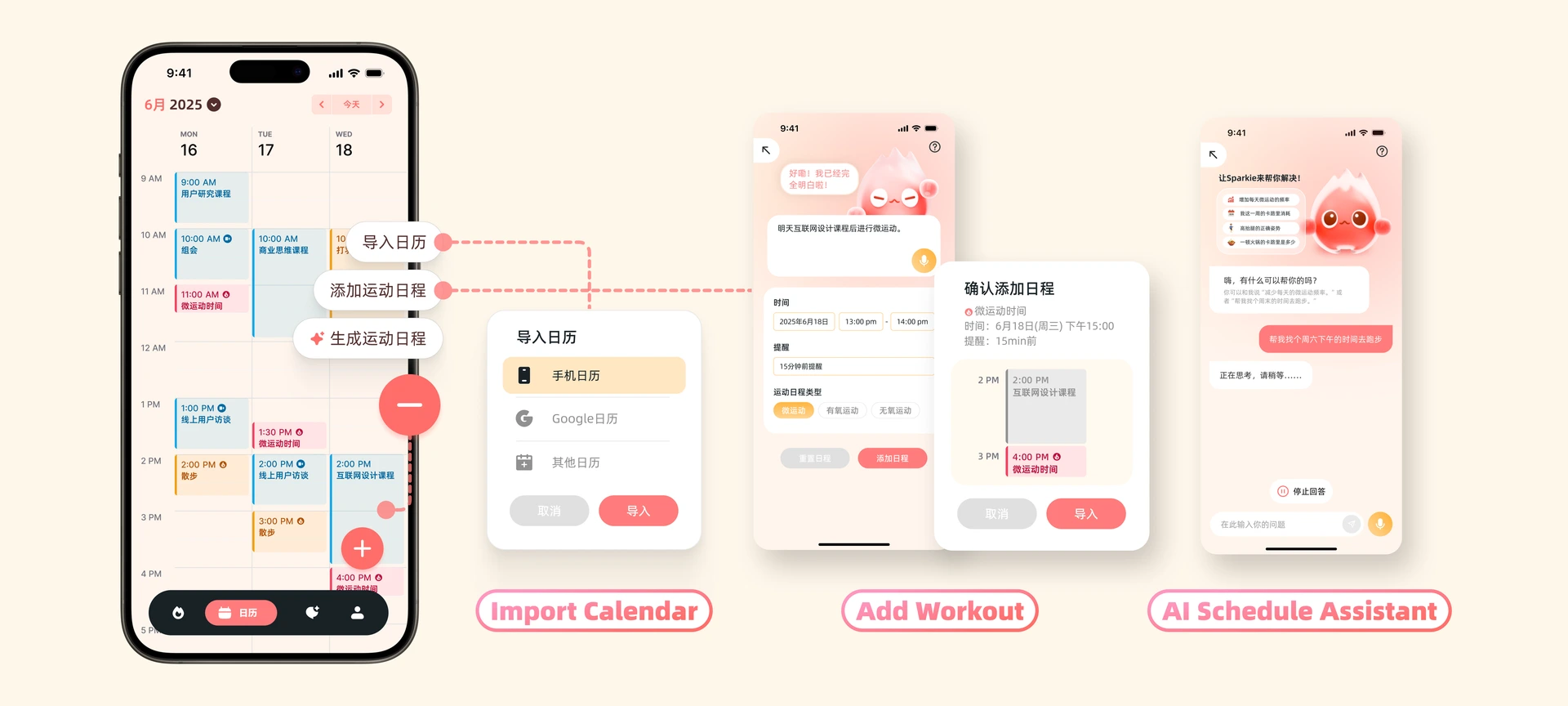
Spark+基于用户导入的日程,智能生成最合适的运动时间段。用户可以借助AI进行日程修订,与Sparkie对话了解运动知识或获取周运动数据。
Based on the user’s imported schedule, Spark+ intelligently identifies the most suitable time slots for exercise. Users can refine their schedules with AI, chat with Sparkie to learn about exercise, or access their weekly activity data.
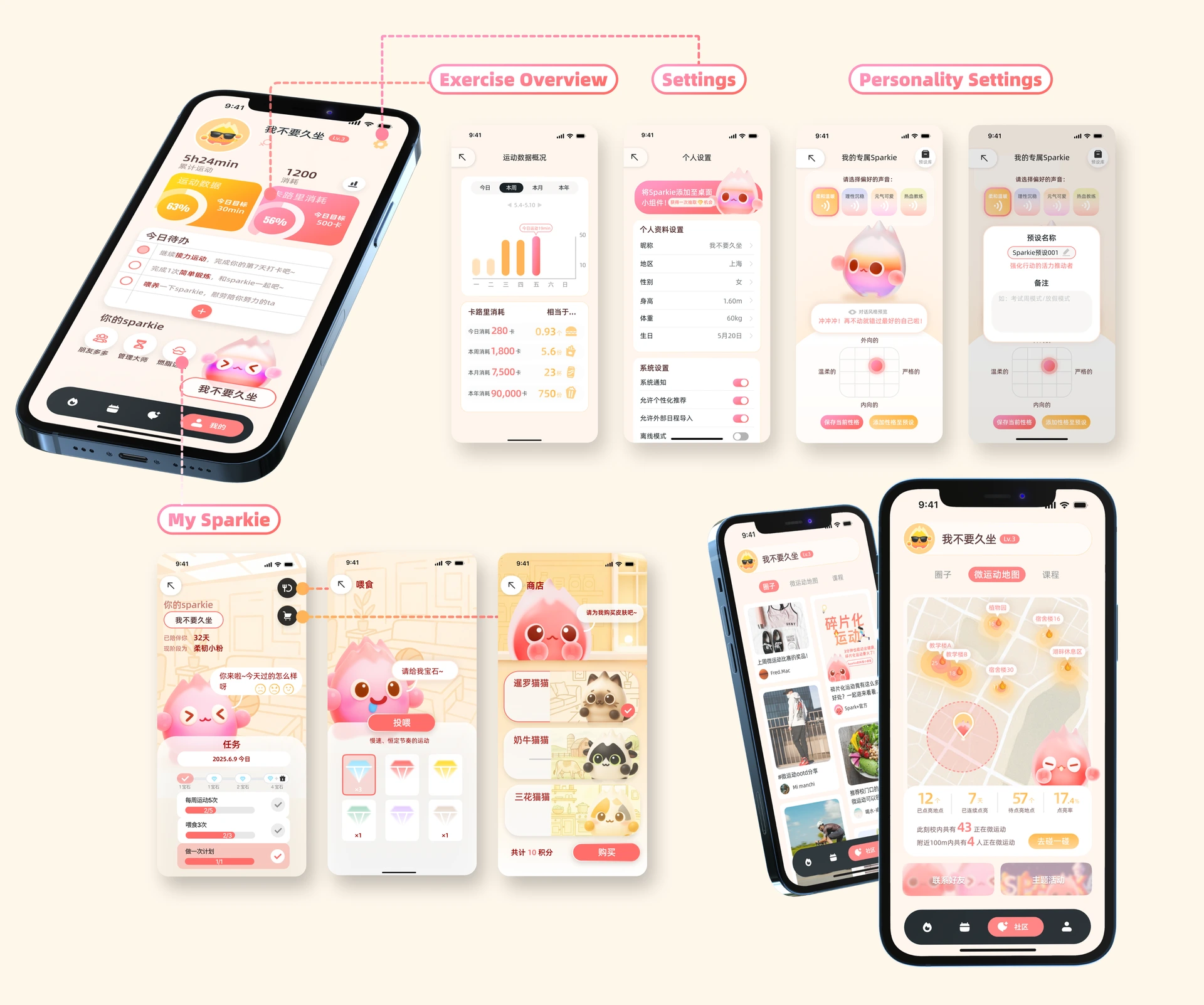
为将微运动带来的积累可视化,同时提升运动的趣味性,Spark+设计了虚拟伙伴Sparkie作为行为反馈载体。每一次运动都会为Sparkie积累成长或装扮资源,用户与角色建立的情感连接也成为继续运动的动力。
To visualize the progress accumulated through micro-exercise while making the experience more engaging, Spark+ introduces Sparkie, a virtual companion that serves as a form of behavioral feedback. Each workout earns growth or customization resources for Sparkie, while the emotional connection users build with the character provides additional motivation to keep exercising.
社交平台两周冷启动期间,累计获得2900+ 浏览、370+ 点赞,并沉淀 110+ 种子用户。
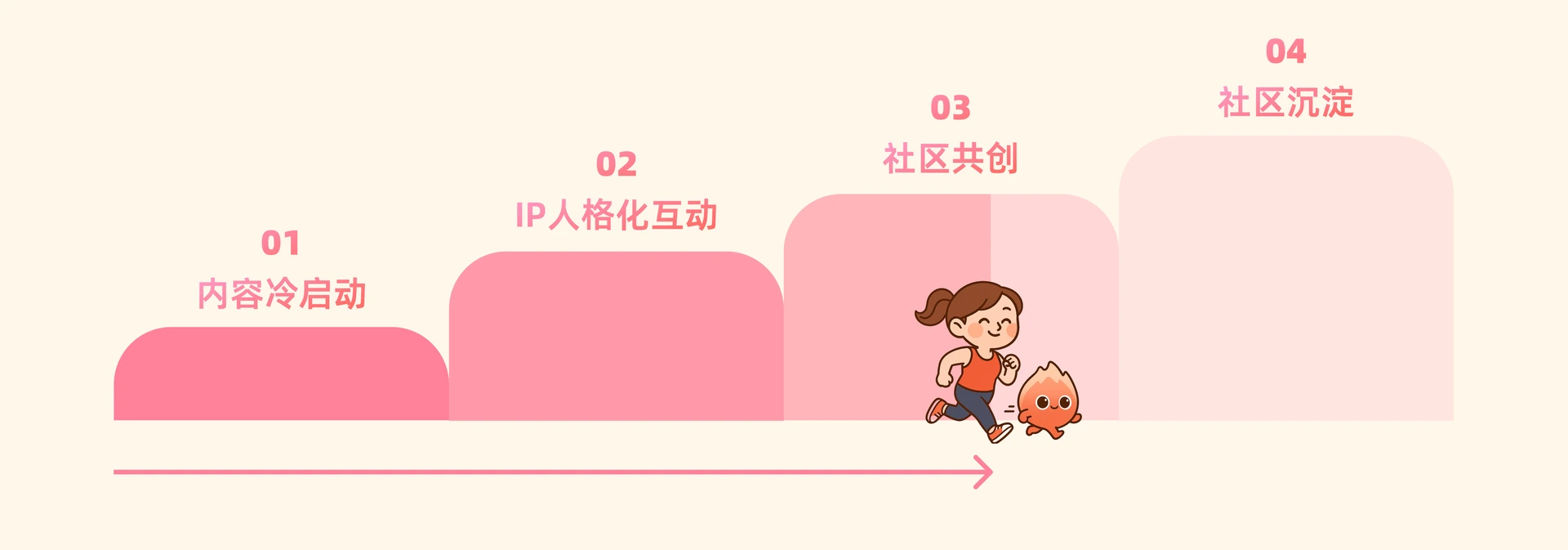
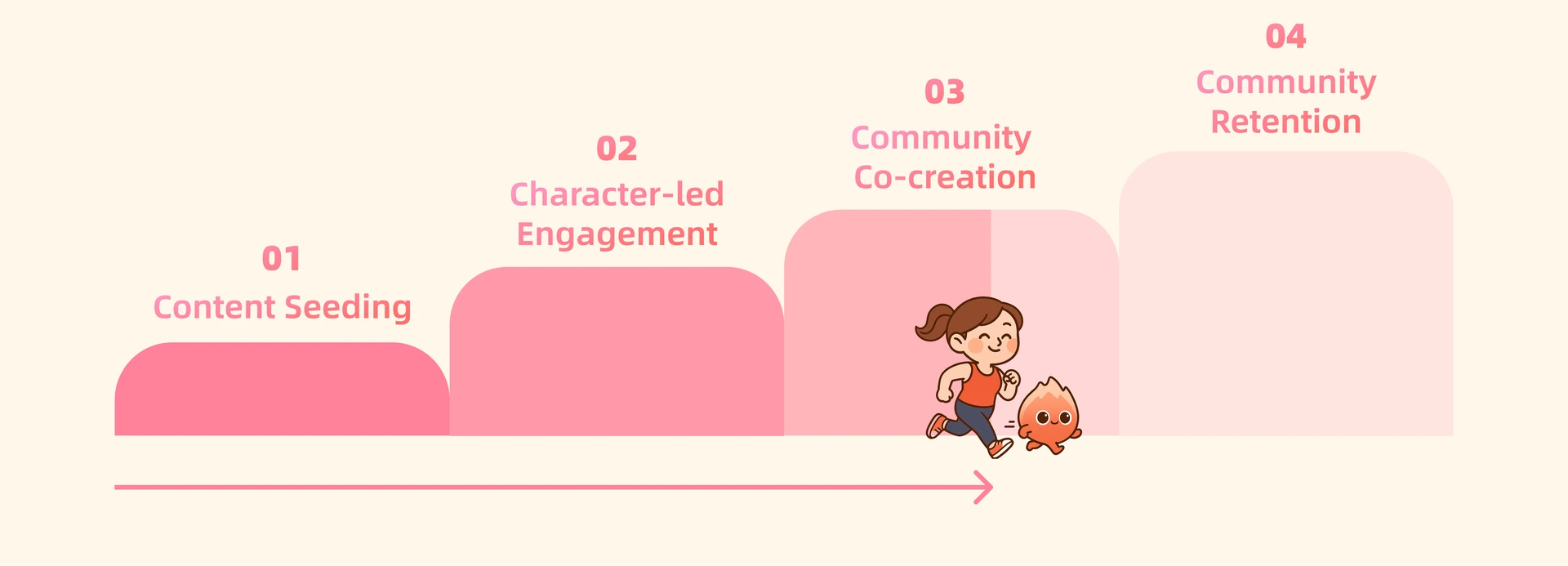
运营初期,我们围绕大学生常见的“没时间运动”“运动难坚持”等问题,以时间管理、校园话题与碎片化运动科普为主要内容切入,引导用户建立对“微运动”及 Spark+ 核心价值的初步认知,同时测试不同内容方向的用户反馈。
At the initial stage, we focused on common student pain points such as “not having enough time to exercise” and “difficulty staying consistent.” Through content around time management, campus life, and micro-exercise education, we introduced the concept of micro-exercise in relatable everyday contexts, helping users understand the core value of Spark+ while testing how different content themes resonated with the audience.
在建立基础产品认知后,我们逐步以IP形象Sparkie作为内容主体,将运动议题嵌入K-pop、OOTD、校园生活、流行梗等大学生熟悉的内容语境中。通过人格化表达与持续互动,让Sparkie成为能够与用户长期焦虑的内容IP,逐步建立角色认知与情感连接。
After establishing initial product awareness, we gradually transformed Sparkie into the primary voice of the account. Exercise-related topics were embedded into familiar student contexts such as K-pop, OOTD, campus life, and trending memes. Through character-driven storytelling, topical content, and ongoing interaction, Sparkie moved beyond direct product promotion and evolved into a recognizable content IP, building stronger familiarity, affinity, and emotional connection with users.
我们进一步尝试将“微运动”从官方内容延伸至用户的真实校园生活。通过抽奖激励、话题标签、UGC征集,鼓励用户将微运动与OOTD、美食打卡、学习间隙等日常场景结合。
我们希望将微运动嵌入已有的校园生活与分享行为,在更多日常场景中增加运动触点。这一策略既降低了参与和内容创作门槛,也通过话题标签持续沉淀社区内容,让微运动逐渐成为一种可被看见、模仿和共同参与的校园生活方式。
Building on this foundation, we began extending micro-exercise from official content into students’ everyday campus lives. Through giveaways, shared hashtags, and UGC prompts, users were encouraged to combine micro-exercise with activities they already experienced and shared, such as OOTD posts, food check-ins, and study breaks.
We aimed to embed micro-exercise into existing campus routines and sharing behaviors, creating more everyday touchpoints for movement. This lowered the barriers to both participation and content creation, while shared hashtags helped accumulate community-generated content and gradually turn micro-exercise into a campus lifestyle that could be seen, replicated, and collectively practiced.